

How Does a Ferro Alloys Plant Work? Manufacturing Process, Raw Materials, Equipment, and Industrial Applications
How Does a Ferro Alloys Plant Work? Manufacturing Process, Raw Materials, Equipment, and Industrial Applications
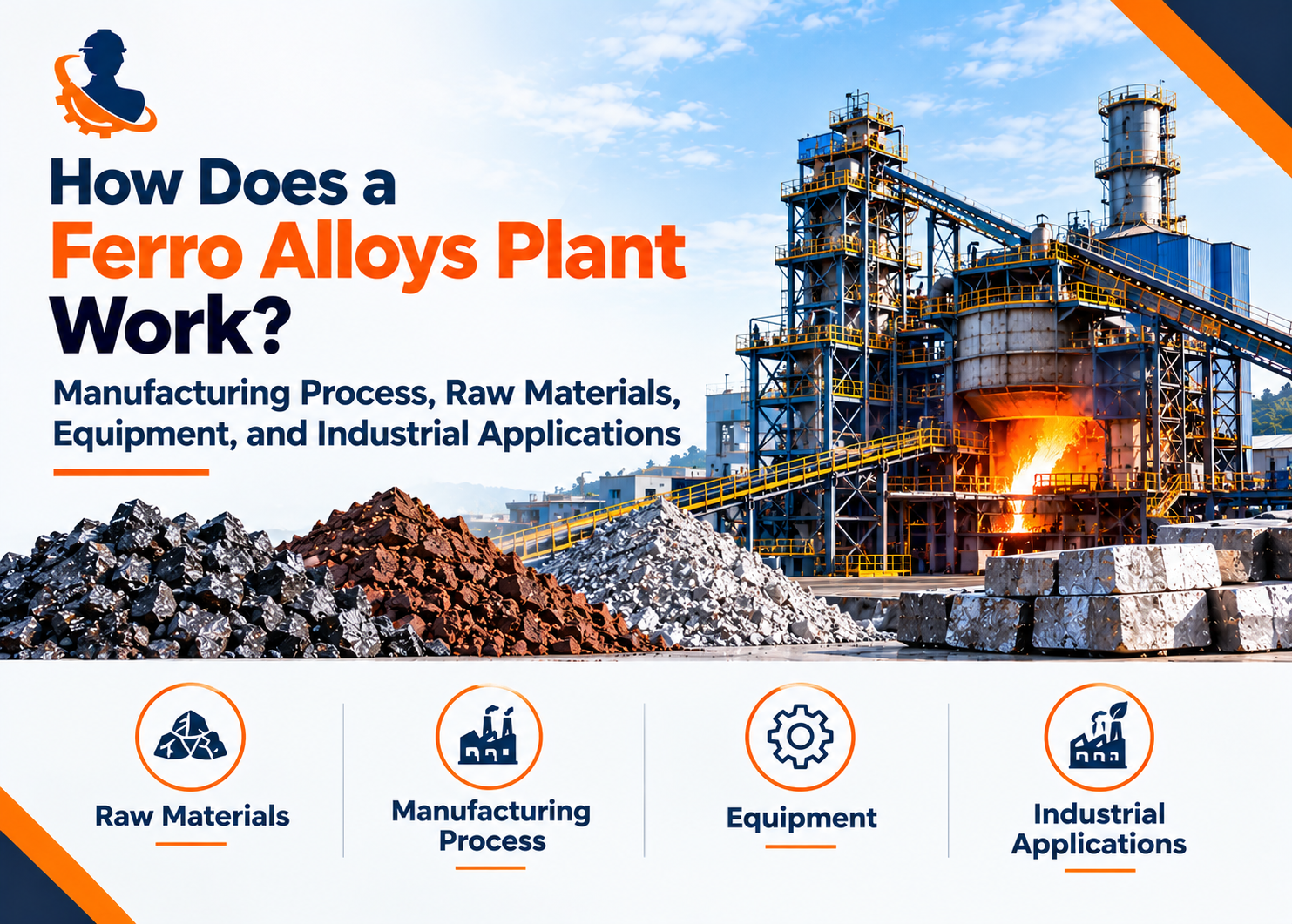
A ferro alloys plant manufactures essential metallic alloys that improve the strength, hardness, durability, and corrosion resistance of steel.
These facilities convert mineral ores into valuable alloying materials through high-temperature smelting, controlled chemical reactions, and specialised industrial equipment.
Ferroalloys support steel manufacturing, infrastructure development, automotive production, engineering, and several other industries.
The manufacturing process involves raw material preparation, furnace charging, smelting, molten metal separation, casting, crushing, and quality testing.
Sarojini Group recognises the importance of ferroalloy manufacturing in supporting industrial production and supplying essential materials to the steel sector.
What Is a Ferro Alloys Plant?
A ferro alloys plant is an industrial manufacturing facility that produces alloys containing iron and elements such as manganese, chromium, or silicon.
These alloys help steel manufacturers achieve specific chemical compositions, mechanical properties, and performance standards.
Ferroalloys also serve as deoxidising agents during steelmaking, helping remove unwanted oxygen from molten steel.
The manufacturing process generally involves reducing metal oxides at high temperatures using carbon or other suitable reducing agents.
Industrial plants typically manufacture several important ferroalloys, depending on their equipment, raw materials, and production requirements.
Common products include:
- Ferromanganese: Improves steel strength, hardness, and wear resistance.
- Silicomanganese: Supplies manganese and silicon for steel alloying and deoxidation.
- Ferrochrome: Provides chromium for stainless steel and specialised alloy production.
- Ferrosilicon: Supports steel deoxidation and alloy composition control.
- Ferromolybdenum: Improves high-temperature strength and resistance to certain forms of corrosion.
- Ferrovanadium: Supports the production of high-strength steels with improved mechanical properties.
Each ferroalloy requires a specific combination of raw materials, operating temperatures, and metallurgical processes.
How Does a Ferro Alloys Plant Work?
A ferroalloy manufacturing facility operates through a sequence of physical, thermal, and chemical processes.
Its primary objective is to extract valuable metallic elements from mineral ores and produce alloys with controlled chemical compositions.
Most bulk ferroalloys are manufactured using submerged arc furnaces, which generate the heat required for reduction smelting.
The main manufacturing stages include:
- Raw Material Procurement: Obtain suitable mineral ores, carbonaceous reducing agents, and fluxing materials.
- Material Preparation: Crush, screen, dry, and blend materials according to production specifications.
- Furnace Charging: Feed prepared materials into the smelting furnace.
- Smelting and Reduction: Apply electrical energy to reduce metal oxides and form molten alloy.
- Metal and Slag Separation: Remove molten products and separate unwanted impurities.
- Casting and Cooling: Solidify molten ferroalloys using suitable casting arrangements.
- Crushing and Screening: Prepare solid alloys according to customer size requirements.
- Quality Inspection: Verify chemical composition and physical specifications before dispatch.
Each stage influences production efficiency, material recovery, operating costs, and final product quality.
Essential Raw Materials Used in Ferroalloy Manufacturing
Raw materials directly influence the chemical composition, purity, and metallurgical performance of ferroalloys.
Manufacturers select materials according to the required alloy grade and furnace operating conditions.
1. Manganese Ore
Manganese ore provides the principal manganese content required for ferromanganese and silicomanganese manufacturing.
Ore quality depends on manganese concentration, iron content, phosphorus levels, moisture, and associated impurities.
Suitable ore selection helps improve metal recovery and maintain stable furnace operations.
2. Chromite Ore
Chromite supplies chromium and iron for ferrochrome manufacturing.
It contains chromium-bearing minerals that undergo reduction during high-temperature smelting.
The chromium-to-iron ratio, ore chemistry, and physical characteristics influence the resulting ferrochrome grade.
3. Quartz and Quartzite
Quartz and quartzite provide silica for ferrosilicon manufacturing.
Carbon reduces silica at high temperatures to produce silicon, which combines with iron to form ferrosilicon.
Silica purity and material sizing are important for efficient furnace operation.
4. Coke and Other Reducing Agents
Coke, coal, charcoal, and selected carbonaceous materials serve as reducing agents in ferroalloy production.
They participate in reactions that remove oxygen from metal oxides and release the required metallic elements.
Reducing agent selection affects furnace permeability, carbon balance, energy consumption, and production efficiency.
5. Limestone and Dolomite
Limestone and dolomite act as fluxing materials in selected ferroalloy manufacturing processes.
They help control slag chemistry and support the separation of unwanted mineral components.
Flux requirements depend on ore composition, alloy specifications, and furnace operating conditions.
6. Electrode Materials
Submerged arc furnaces require suitable carbon electrodes to deliver electrical energy into the furnace burden.
Some facilities use self-baking electrodes manufactured from electrode paste, while others use different carbon electrode arrangements.
Electrode quality and operating stability influence electrical performance and smelting efficiency.
Step-by-Step Ferroalloy Manufacturing Process
The production process requires careful control of raw material proportions, furnace conditions, reduction reactions, and molten metal handling.
Step 1: Raw Material Crushing and Screening
Mineral ores arrive at manufacturing facilities in different sizes and physical conditions.
Crushing equipment reduces oversized materials, while vibrating screens separate particles according to the required dimensions.
Consistent sizing improves charge distribution and supports efficient gas movement within the furnace.
Plants may also remove excess moisture before transferring materials to storage or batching systems.
Step 2: Raw Material Batching and Mixing
Manufacturers calculate the required proportions of ore, reducing agents, and fluxes according to the desired alloy composition.
Weighing and batching systems help maintain accurate material ratios.
The prepared mixture enters storage bins or charging arrangements connected to the furnace.
Proper batching reduces chemical variations and supports consistent production.
Step 3: Charging the Submerged Arc Furnace
A submerged arc furnace receives the prepared raw materials through charging chutes, hoppers, or mechanical feeding systems.
Large carbon electrodes extend into the furnace charge and deliver substantial electrical energy.
Operators regulate material feeding to maintain a suitable burden profile and stable reaction conditions.
Poor charge distribution can cause uneven heating, gas-flow problems, and production instability.
Step 4: High-Temperature Smelting
Electrical energy generates intense heat within the submerged arc furnace.
The operating temperature depends on the ferroalloy, furnace design, and required metallurgical reactions.
Carbon reacts with oxygen present in metal oxides, allowing metallic elements to be released.
The resulting metals combine to form the required ferroalloy.
Meanwhile, unwanted mineral components enter the molten slag phase.
Step 5: Molten Metal Tapping
Molten alloy and slag accumulate in the lower sections of the furnace.
Operators periodically open tapping arrangements to remove the molten products.
Appropriate tapping equipment transfers the material into suitable ladles or receiving vessels.
Controlled tapping helps reduce operational disturbances, excessive material losses, and safety risks.
Step 6: Slag Separation
Slag contains mineral impurities, flux-derived compounds, and other non-metallic materials.
Its composition and density differ from those of the molten ferroalloy.
Operators separate slag from metal using appropriate furnace tapping or downstream separation arrangements.
Some slag streams may undergo processing for approved industrial applications or metal recovery.
Step 7: Casting and Solidification
The molten ferroalloy enters casting beds, moulds, or other suitable solidification systems.
Controlled cooling transforms the liquid material into solid alloy products.
Cooling practices depend on alloy composition, plant equipment, and required product characteristics.
Once solidified, the material becomes suitable for mechanical handling and further processing.
Step 8: Crushing, Sizing, and Packaging
Solid ferroalloys undergo crushing and screening to achieve the dimensions required by industrial customers.
Different steelmaking operations require different lump sizes or specialised product forms.
Manufacturers separate oversized and undersized materials using crushing machines and screening equipment.
The finished material undergoes inspection, weighing, packaging, and dispatch preparation.
Major Equipment Used in a Ferro Alloys Plant
Modern ferroalloy manufacturing depends on reliable mechanical, electrical, thermal, and material-handling equipment.
Each system performs a specific function within the production process.
Submerged Arc Furnace
The submerged arc furnace forms the central processing unit for many bulk ferroalloys.
It uses electrical energy to maintain high-temperature reduction reactions inside a refractory-lined furnace vessel.
Automatic electrode regulation and electrical monitoring support stable furnace performance.
Crushers and Vibrating Screens
Crushers reduce raw material and finished alloy sizes according to production requirements.
Vibrating screens separate particles into suitable categories for furnace charging or customer delivery.
These machines improve material consistency and handling efficiency.
Conveyor and Charging Systems
Conveyors, hoppers, bins, and charging equipment transfer materials throughout the manufacturing facility.
Automated systems can improve feeding accuracy and reduce unnecessary manual handling.
Transformers and Electrical Systems
Furnace transformers supply the high electrical currents required for smelting.
Electrical control systems regulate operating conditions and monitor equipment performance.
Reliable power infrastructure is essential for maintaining consistent production.
Cooling Systems
Industrial cooling arrangements protect selected furnace components, electrical equipment, and associated machinery against excessive temperatures.
Cooling towers, pumps, circulation systems, and monitoring equipment support thermal management.
Pollution Control Equipment
Furnace operations generate dust, fumes, and process gases that require appropriate management.
Bag filters, gas-cleaning systems, enclosed handling arrangements, and suitable extraction equipment help control emissions.
The required systems depend on furnace design, alloy type, environmental approvals, and applicable regulations.
Different Types of Ferroalloys Manufactured
Ferroalloy manufacturing facilities produce different alloy categories according to industrial demand.
Each product contributes specific characteristics to steelmaking and other metallurgical operations.
Ferromanganese
Ferromanganese contains manganese and iron, with carbon content varying according to the product grade.
Steel manufacturers use it to introduce manganese and support steel deoxidation.
Manganese improves hardenability and contributes to strength and wear resistance.
Silicomanganese
Silicomanganese contains manganese, silicon, and iron.
It performs both alloying and deoxidising functions during steel production.
The material is widely used in manufacturing various carbon and alloy steel grades.
Ferrochrome
Ferrochrome supplies chromium for stainless steel and specialised alloy production.
Chromium contributes to corrosion resistance, oxidation resistance, and selected mechanical properties.
High-carbon ferrochrome commonly originates from submerged arc furnace smelting.
Lower-carbon grades may require additional or alternative metallurgical processing.
Ferrosilicon
Ferrosilicon contains iron and silicon in different commercial proportions.
Steelmakers use it primarily for deoxidation and controlled silicon additions.
Selected ferrosilicon grades also support foundry applications and cast iron processing.
Industrial Applications of Ferroalloys
Ferroalloys contribute to several manufacturing sectors where controlled steel chemistry and material performance are essential.
1. Steel Manufacturing
Steel production represents a major application for ferroalloys.
Manufacturers add selected alloys to achieve specified chemical compositions and mechanical properties.
Ferromanganese, ferrosilicon, and silicomanganese support many conventional steelmaking operations.
2. Stainless Steel Production
Stainless steel manufacturing requires chromium to achieve corrosion-resistant properties.
Ferrochrome provides an important chromium source for these applications.
Different stainless steel grades require carefully controlled alloy additions.
3. Automotive Industry
Automotive manufacturers use alloy steels in components that require strength, fatigue resistance, and durability.
These include selected transmission parts, shafts, fasteners, suspension components, and structural components.
Ferroalloys contribute to the required properties of these materials.
4. Construction and Infrastructure
Construction projects depend on structural steels with suitable strength, toughness, and processing characteristics.
Ferroalloy additions support the manufacture of reinforcing steel, structural sections, and specialised construction materials.
5. Heavy Engineering
Heavy engineering industries manufacture machinery, industrial equipment, pressure-containing components, and specialised structures.
Alloying elements help achieve performance requirements involving mechanical loading, temperature, and wear.
6. Foundries and Metal Casting
Foundries use selected ferroalloys to modify melt chemistry and achieve desired casting properties.
Ferrosilicon is particularly important in several cast iron production processes.
Quality Control in Ferroalloy Manufacturing
Quality control ensures that manufactured ferroalloys meet the chemical and physical requirements of industrial customers.
Production facilities monitor several important parameters throughout the manufacturing cycle.
Chemical composition testing: Laboratories assess manganese, chromium, silicon, carbon, and other elements according to product specifications.
Raw material inspection: Teams examine ore chemistry, moisture, particle size, and impurity levels before furnace charging.
Furnace monitoring: Operators track electrical load, electrode conditions, material consumption, and process stability.
Slag analysis: Testing helps assess slag chemistry and the effectiveness of metallurgical reduction.
Finished product inspection: Screening and sampling procedures verify product size and composition before dispatch.
Accurate quality control helps reduce rejected batches, improve consistency, and support dependable steelmaking operations.
Environmental Management and Industrial Safety
Ferroalloy manufacturing involves high temperatures, heavy equipment, substantial electrical loads, and potentially hazardous process gases.
Effective environmental management and workplace safety measures are therefore essential.
Manufacturing facilities should implement suitable operational controls and regularly inspect critical equipment.
Important measures include:
- Dust Control: Install suitable collection and filtration systems.
- Gas Management: Monitor and safely handle furnace gases, including carbon monoxide.
- Worker Protection: Provide appropriate personal protective equipment and safety training.
- Heat Management: Maintain suitable cooling arrangements and controlled working procedures.
- Waste Handling: Segregate, process, or dispose of industrial residues according to applicable requirements.
- Electrical Safety: Maintain furnace transformers, electrode systems, and electrical protection arrangements.
- Emergency Preparedness: Establish procedures for equipment failures, molten metal incidents, and other industrial emergencies.
Environmental performance also depends on efficient material utilisation and responsible management of by-products.
Factors Affecting Ferroalloy Production Efficiency
Manufacturing efficiency depends on several interconnected operational and metallurgical factors.
Raw Material Quality
Consistent ore chemistry and appropriate particle sizing support predictable smelting reactions.
Excessive impurities may increase slag generation and reduce recoverable metal output.
Electrical Energy Consumption
Electricity represents a major operating cost in submerged arc furnace production.
Stable electrode control, appropriate burden conditions, and effective furnace operation influence energy efficiency.
Furnace Maintenance
Regular maintenance protects refractory linings, tapping arrangements, electrodes, and mechanical systems.
Preventive inspections help reduce unexpected shutdowns and production interruptions.
Process Monitoring
Monitoring electrical parameters, raw material consumption, slag chemistry, and alloy composition supports informed operating decisions.
Automated data collection can improve consistency and identify developing equipment problems.
Skilled Workforce
Qualified operators, metallurgists, maintenance teams, and safety personnel support stable plant operations.
Technical training strengthens operating discipline and helps minimise preventable process variations.
Importance of Ferroalloy Manufacturing in India’s Industrial Sector
India’s steel and engineering industries depend on reliable access to ferroalloys for manufacturing different steel grades.
Domestic ferroalloy production supports industrial supply chains and contributes to mineral-based manufacturing activities.
Manufacturing facilities also create demand for mining, logistics, electrical equipment, industrial fabrication, maintenance, and engineering services.
The sector benefits from improvements in production technology, energy efficiency, quality control, and environmental performance.
Sarojini Group recognises the significance of strong industrial infrastructure and dependable manufacturing processes in supporting the ferroalloy and steel sectors.
FAQs
What raw materials are required in a ferro alloys plant?
Common raw materials include manganese ore, chromite ore, quartzite, coke, coal, limestone, and dolomite.
The exact combination depends on the ferroalloy being manufactured.
Carbonaceous materials support reduction reactions, while selected fluxes help control slag chemistry and impurity separation.
Which equipment is most important in a ferro alloys plant?
The submerged arc furnace is a principal manufacturing unit for many bulk ferroalloys.
Other important equipment includes crushers, screening systems, conveyors, charging systems, transformers, cooling equipment, casting arrangements, and pollution control systems.
Together, these systems support efficient material processing and alloy production.
How are ferroalloys used in steel manufacturing?
Ferroalloys introduce controlled quantities of alloying elements into molten steel.
Ferromanganese improves selected mechanical properties, ferrochrome supplies chromium for stainless steel, and ferrosilicon supports deoxidation.
Steelmakers select specific alloys according to the required grade, composition, and application.
NEWSLETTER
Sign up your mailing list to get lastest Updates.