

Complete Guide to a Steel Fabrication Workshop: Processes, Tools, and Applications
Complete Guide to a Steel Fabrication Workshop: Processes, Tools, and Applications
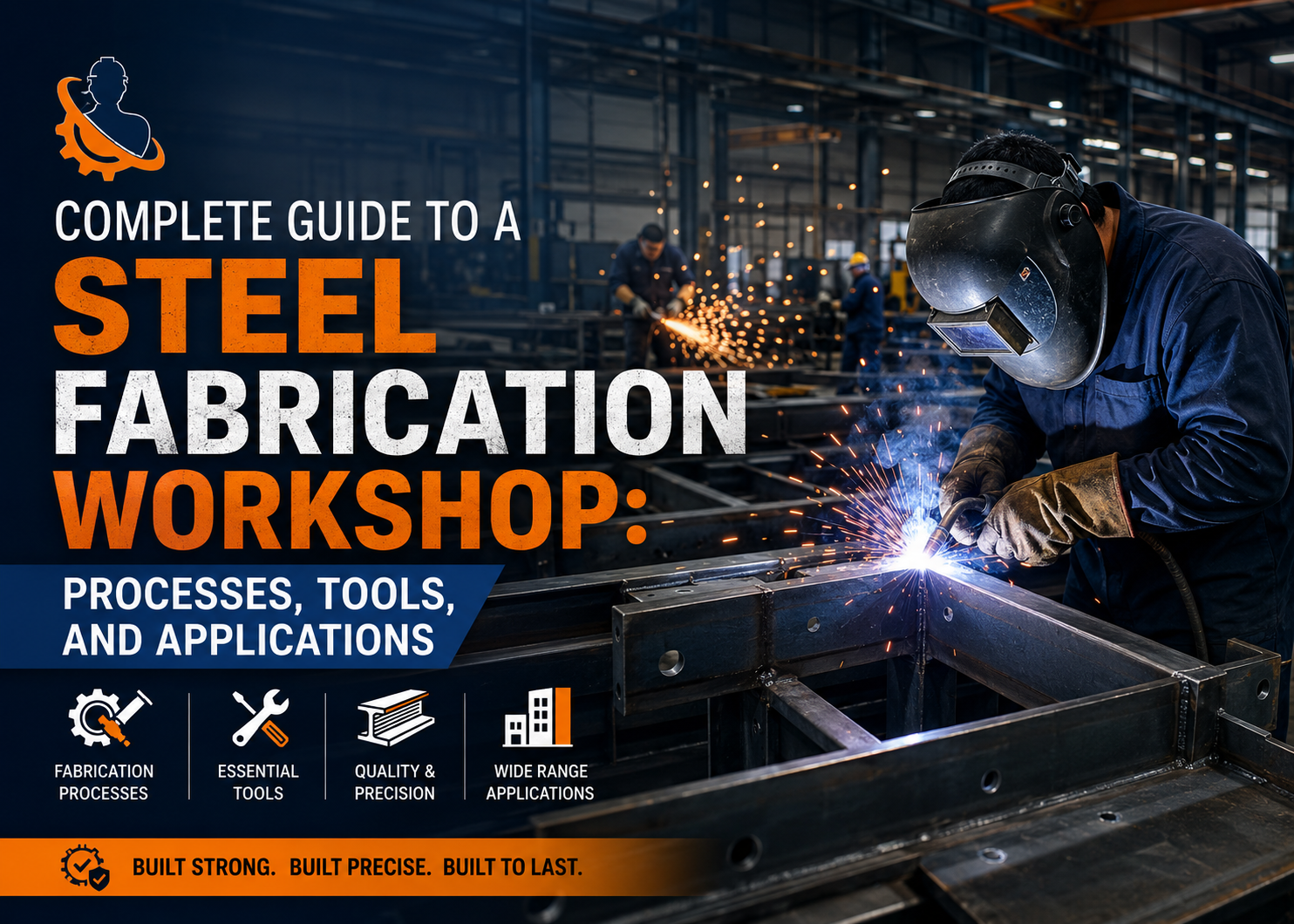
Steel forms the backbone of modern infrastructure, industrial facilities, transportation systems, and commercial developments. From towering structures and manufacturing plants to bridges and specialized machinery, steel components play a critical role in creating durable and reliable solutions. Behind every precision-engineered steel structure lies a well-organized and highly skilled Steel fabrication workshop where raw steel is transformed into functional products through a series of specialized processes.
At Sarojini Group, steel fabrication is more than a manufacturing activity. It is a combination of engineering expertise, advanced machinery, quality control, and skilled craftsmanship that ensures every project meets exact specifications and industry standards.
This detailed resource explores the essential processes, tools, equipment, and applications associated with a modern Steel fabrication workshop, helping industry professionals, project managers, engineers, and enthusiasts gain deeper insight into this vital sector.
What Is a Steel Fabrication Workshop?
A Steel fabrication workshop is a specialized facility where raw steel materials are processed, shaped, assembled, and finished into components or structures required for industrial, commercial, and infrastructure projects.
The primary objective of a fabrication workshop is to convert steel plates, beams, channels, pipes, and other raw materials into finished products that are ready for installation or further assembly.
Such workshops typically house advanced machinery, welding stations, cutting equipment, inspection tools, and material handling systems that enable efficient production while maintaining strict quality standards.
The operations performed within a fabrication facility often include:
- Material preparation
- Cutting and shaping
- Bending and forming
- Welding and joining
- Drilling and machining
- Surface treatment
- Quality inspection
- Final assembly
Each activity contributes to producing durable and high-performance steel products that can withstand demanding operating environments.
Importance of a Steel Fabrication Workshop
The importance of a Steel fabrication workshop extends across multiple industries due to its ability to provide customized and precision-engineered steel solutions.
Some key benefits include:
Precision Manufacturing
Modern fabrication facilities utilize advanced machinery and computerized systems that ensure components are manufactured according to exact engineering drawings.
Customization
Every project has unique requirements. Fabrication workshops can produce tailor-made structures, machinery parts, support systems, and assemblies that fit specific applications.
Improved Structural Integrity
Professional fabrication practices ensure that components possess the required strength, durability, and load-bearing capacity.
Faster Project Execution
Pre-fabricated steel components reduce on-site construction time and improve project efficiency.
Cost Efficiency
Accurate fabrication minimizes material waste, lowers labor costs, and reduces the need for rework.
Main Processes in a Steel Fabrication Workshop
The success of any Steel fabrication workshop depends on the seamless execution of several interconnected manufacturing processes.
1. Material Selection and Preparation
Every fabrication project begins with selecting the appropriate grade and type of steel.
Common materials include:
- Carbon steel
- Mild steel
- Stainless steel
- Alloy steel
- Structural steel
The chosen material must satisfy project requirements related to strength, corrosion resistance, durability, and operating conditions.
Before fabrication begins, materials undergo inspection to verify dimensions, surface quality, and compliance with specifications.
2. Steel Cutting
Cutting is one of the most fundamental operations performed in a fabrication workshop.
Different cutting methods are used depending on material thickness and project requirements.
Plasma Cutting
Plasma cutting uses ionized gas to cut electrically conductive materials with speed and precision.
Benefits include:
- Fast production rates
- High accuracy
- Smooth edges
- Suitable for thick materials
Laser Cutting
Laser cutting delivers exceptional precision and clean finishes.
Advantages include:
- Minimal material waste
- High repeatability
- Excellent dimensional accuracy
- Suitable for intricate designs
Oxy-Fuel Cutting
This method uses oxygen and fuel gas to cut thick steel sections.
It is commonly used for:
- Heavy structural steel
- Industrial fabrication projects
- Large steel plates
3. Bending and Forming
After cutting, steel components often require shaping to achieve specific geometries.
Bending operations are performed using specialized machinery such as press brakes and rolling machines.
Common applications include:
- Structural frames
- Pipe supports
- Industrial enclosures
- Tanks
- Duct systems
Accurate bending ensures dimensional consistency and proper assembly during installation.
4. Machining Operations
Many fabricated components require additional machining processes to achieve exact tolerances.
These operations include:
- Drilling
- Milling
- Turning
- Tapping
- Boring
Machining enhances component functionality and ensures compatibility with other assembled parts.
5. Welding and Joining
Welding represents the heart of any Steel fabrication workshop.
It permanently joins steel components to create strong and reliable assemblies.
Common welding methods include:
MIG Welding
Metal Inert Gas welding is widely used for high-speed production and clean welds.
TIG Welding
Tungsten Inert Gas welding provides exceptional precision and is often used for stainless steel fabrication.
Stick Welding
This versatile process is suitable for outdoor and heavy-duty applications.
Flux-Cored Arc Welding
Frequently used in industrial projects requiring high deposition rates and strong weld joints.
Proper welding procedures are essential for ensuring structural integrity and long-term performance.
6. Assembly
Following fabrication and welding, components are assembled into larger structures or systems.
Assembly activities may include:
- Frame construction
- Equipment mounting
- Structural integration
- Mechanical fitting
Experienced technicians verify alignment and dimensional accuracy during this stage.
7. Surface Preparation and Finishing
Surface treatment improves durability, appearance, and corrosion resistance.
Common finishing methods include:
Sandblasting
Removes rust, mill scale, and contaminants from steel surfaces.
Painting
Provides protection against moisture, chemicals, and environmental exposure.
Powder Coating
Offers a durable and attractive finish suitable for various industrial applications.
Galvanizing
Applies a protective zinc coating that significantly improves corrosion resistance.
Essential Tools Used in a Steel Fabrication Workshop
The efficiency and quality of fabrication operations depend heavily on the tools and equipment available within the workshop.
Cutting Tools
- Plasma cutters
- Laser cutting machines
- Oxy-fuel torches
- Metal saws
- Shearing machines
Measuring Instruments
Precision measurement ensures fabrication accuracy.
Common tools include:
- Vernier calipers
- Micrometers
- Measuring tapes
- Laser measurement devices
- Height gauges
Welding Equipment
A modern Steel fabrication workshop typically uses:
- MIG welders
- TIG welders
- Stick welding machines
- Welding positioners
- Welding manipulators
Material Handling Equipment
Heavy steel materials require specialized handling systems.
Examples include:
- Overhead cranes
- Forklifts
- Chain blocks
- Hoists
- Gantry cranes
Machining Equipment
- CNC milling machines
- Drilling machines
- Lathes
- Boring machines
- Tapping machines
Forming Equipment
- Press brakes
- Hydraulic presses
- Plate rolling machines
- Angle bending machines
Quality Control in a Steel Fabrication Workshop
Quality control is a critical component of fabrication operations.
A dedicated inspection process ensures every product meets project requirements and industry standards.
Material Inspection
Raw materials are checked for:
- Grade verification
- Dimensions
- Surface quality
- Certification compliance
Dimensional Inspection
Fabricated parts are measured against engineering drawings to ensure accuracy.
Weld Inspection
Weld quality is evaluated through:
- Visual inspection
- Ultrasonic testing
- Magnetic particle testing
- Dye penetrant testing
Surface Inspection
Protective coatings and finishes are assessed for consistency and durability.
Quality assurance helps prevent failures, reduces project risks, and enhances customer confidence.
Safety Practices in a Steel Fabrication Workshop
Fabrication activities involve heavy equipment, high temperatures, and potentially hazardous operations.
Therefore, safety remains a top priority.
Key safety measures include:
Personal Protective Equipment
Workers should use:
- Safety helmets
- Welding shields
- Gloves
- Safety shoes
- Protective clothing
- Eye protection
Equipment Maintenance
Regular maintenance prevents mechanical failures and improves workplace safety.
Fire Prevention
Workshops must maintain:
- Fire extinguishers
- Emergency exits
- Fire detection systems
- Safe storage procedures
Training Programs
Continuous employee training helps reduce accidents and promotes safe work practices.
Applications of Steel Fabrication Across Industries
The products manufactured within a Steel fabrication workshop serve numerous sectors.
Construction Industry
Fabricated steel components are widely used in:
- Commercial buildings
- Industrial facilities
- Warehouses
- High-rise structures
- Infrastructure projects
Manufacturing Sector
Fabrication supports the production of:
- Machinery frames
- Equipment bases
- Production systems
- Conveyor structures
Energy Industry
Steel fabrication contributes to:
- Power plants
- Renewable energy projects
- Oil and gas facilities
- Transmission structures
Transportation Sector
Applications include:
- Railway components
- Vehicle structures
- Marine equipment
- Aviation support systems
Mining Industry
Fabricated steel products are essential for:
- Processing plants
- Heavy equipment structures
- Material handling systems
- Safety platforms
Agricultural Applications
Farm operations rely on fabricated steel for:
- Storage systems
- Equipment frames
- Irrigation structures
- Processing facilities
Advantages of Choosing a Professional Steel Fabrication Workshop
Partnering with an experienced fabrication company offers several advantages.
Engineering Expertise
Professional teams understand structural requirements and manufacturing best practices.
Modern Technology
Advanced equipment improves production speed and accuracy.
Reliable Quality Standards
Established fabrication facilities maintain rigorous inspection procedures.
Project Flexibility
Custom solutions can be developed for projects of varying size and complexity.
Timely Delivery
Efficient workflow management helps ensure project schedules remain on track.
How Sarojini Group Delivers Excellence in Steel Fabrication
Sarojini Group combines technical expertise, advanced fabrication capabilities, and a commitment to quality to deliver reliable steel solutions for a wide range of industries.
The company’s fabrication operations focus on:
- Precision manufacturing
- Quality assurance
- Skilled workmanship
- Timely project execution
- Customer-focused solutions
By integrating modern equipment with experienced engineering teams, Sarojini Group consistently delivers fabricated steel products that meet demanding performance requirements and industry standards.
Future of Steel Fabrication Workshops
Technology continues to reshape fabrication operations through automation, digital design tools, and intelligent manufacturing systems.
Key developments include:
- CNC automation
- Robotic welding systems
- Advanced quality inspection technologies
- Smart production monitoring
- Digital fabrication workflows
These innovations improve productivity, reduce errors, and enhance manufacturing efficiency while maintaining high quality standards.
Conclusion
A Steel fabrication workshop serves as the foundation of countless industrial, commercial, and infrastructure projects. Through a combination of cutting, forming, machining, welding, assembly, and finishing processes, raw steel is transformed into highly engineered products that support modern development.
From structural frameworks and industrial machinery to energy facilities and transportation systems, fabricated steel components remain indispensable across numerous sectors. The effectiveness of a fabrication workshop depends on skilled personnel, advanced equipment, rigorous quality control, and a strong commitment to safety.
Sarojini Group continues to uphold these principles by delivering precision-engineered steel fabrication solutions tailored to the needs of diverse industries. With expertise, innovation, and quality at the core of every project, the company remains a trusted partner for dependable steel fabrication services.
NEWSLETTER
Sign up your mailing list to get lastest Updates.