

How Does a Ferro Alloys Plant in Odisha Work? Manufacturing Process, Raw Materials, and Industrial Applications
How Does a Ferro Alloys Plant in Odisha Work? Manufacturing Process, Raw Materials, and Industrial Applications
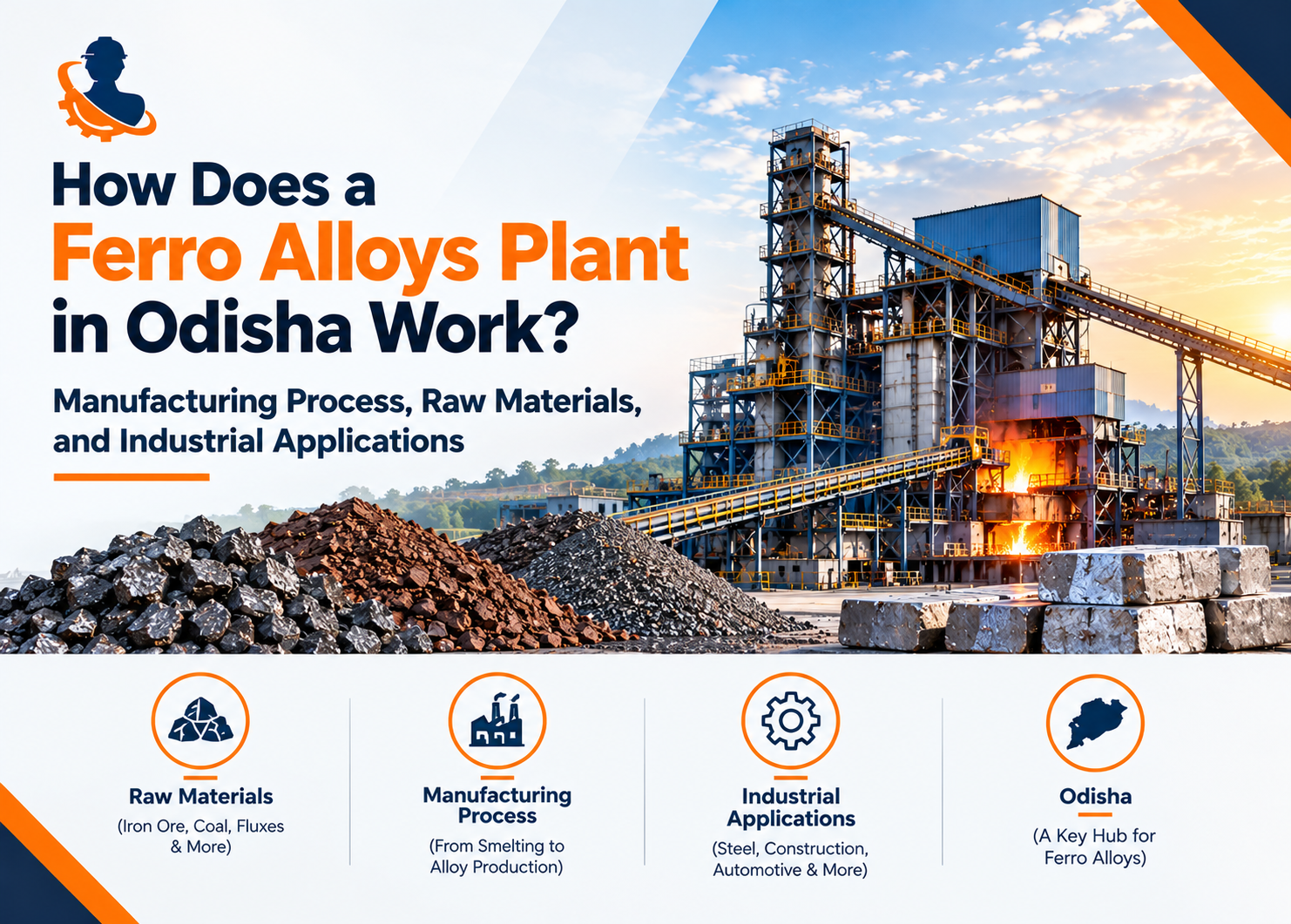
Ferro alloys are essential materials in steel manufacturing, helping industries produce stronger, more durable, and corrosion-resistant metal products.
A ferro alloys plant in Odisha converts mineral ores into valuable iron-based alloys through controlled heating, chemical reduction, refining, and quality testing.
Odisha has significant importance in India’s ferro alloys industry because of its mineral resources, industrial infrastructure, and established steel manufacturing sector.
The state supports ferro chrome and other ferro alloy production through mineral supply chains, specialised equipment, and industrial processing facilities.
Understanding how these plants operate reveals the relationship between raw materials, furnace technology, production efficiency, and finished alloy quality.
What Is a Ferro Alloys Plant?
A ferro alloys plant is an industrial manufacturing facility that produces iron-based alloys containing elements such as chromium, manganese, and silicon.
Steel manufacturers use these alloys to control chemical composition, improve mechanical properties, and achieve specific performance requirements during steelmaking.
Most ferro alloy production involves high-temperature reduction processes that separate valuable metals from their mineral compounds.
Manufacturers typically operate submerged arc furnaces, material handling systems, casting facilities, and laboratories to maintain production quality.
Major Types of Ferro Alloys
Different ferro alloys serve different metallurgical purposes.
- Ferro Chrome: Supplies chromium for stainless steel, alloy steel, and corrosion-resistant applications.
- Ferro Manganese: Introduces manganese to improve steel properties and support deoxidation and desulphurisation.
- Silico Manganese: Supplies silicon and manganese for steel deoxidation and alloying.
- Ferro Silicon: Acts as a deoxidising agent and supplies silicon for various steel grades.
- Speciality Ferro Alloys: Supply elements such as vanadium, molybdenum, and niobium for specialised steel production.
Each product requires a suitable combination of raw materials, processing conditions, and quality control procedures.
Why Is Odisha Important for Ferro Alloys Manufacturing?
Odisha plays a significant role in India’s mineral-based manufacturing sector because of its chromite deposits and integrated industrial infrastructure.
The Sukinda region of Jajpur district is particularly important for chromite mining, which supports ferro chrome production.
Chromite contains chromium and iron oxides that manufacturers process into ferro chrome using high-temperature smelting technology.
Availability of Mineral Resources
Mineral availability significantly influences the location and operating costs of ferro alloy plants.
Odisha provides access to important mineral supply chains, particularly those associated with chromium production.
Reliable raw material sourcing helps manufacturers maintain consistent furnace operations and manage transportation requirements.
Established Industrial Infrastructure
Industrial areas in Odisha support mining, mineral processing, steel manufacturing, transportation, and related engineering activities.
These interconnected industries create opportunities for better coordination between raw material suppliers and downstream steel producers.
Transportation and Export Connectivity
Road networks, rail infrastructure, and port facilities support the movement of minerals, equipment, and finished ferro alloys.
Efficient logistics allow manufacturers to serve domestic steel plants and international industrial customers.
Growing Demand from Steel Manufacturers
Stainless steel and alloy steel production creates continuous demand for chromium, manganese, silicon, and other alloying materials.
Consequently, ferro alloy manufacturers play an important role in maintaining the industrial supply chain.
What Raw Materials Are Used in a Ferro Alloys Plant in Odisha?
Raw material selection determines the chemical composition, recovery efficiency, energy consumption, and quality of finished ferro alloys.
Manufacturers select materials according to the alloy grade, furnace design, and metallurgical requirements.
1. Chromite Ore
Chromite ore is the primary chromium-bearing raw material used in ferro chrome manufacturing.
It contains chromium and iron oxides, along with mineral constituents that influence the smelting process.
Manufacturers evaluate chromium content, chromium-to-iron ratio, particle size, and impurity levels before processing.
2. Manganese Ore
Manganese ore provides manganese for ferro manganese and silico manganese manufacturing.
Its manganese content, iron content, phosphorus concentration, and physical characteristics affect the suitability of the material.
3. Quartz and Quartzite
Quartz and quartzite supply silica, which serves different purposes depending on the alloy manufacturing process.
In ferro silicon production, silica provides silicon. In ferro chrome smelting, quartzite can help regulate slag chemistry.
4. Coke and Other Carbonaceous Reductants
Coke, suitable coal, and other carbonaceous materials act as reducing agents during high-temperature smelting.
Carbon reacts with metal oxides, helping release metals from their chemically combined forms.
The material’s carbon content, ash composition, reactivity, and electrical characteristics influence furnace performance.
5. Fluxing Materials
Fluxes help control slag composition, melting behaviour, and the separation of impurities.
Depending on the process, manufacturers may use limestone, dolomite, quartzite, or other suitable materials.
6. Electrical Energy
Electricity supplies the heat required for reduction and melting in submerged arc furnaces.
Stable electrical supply is especially important because ferro alloy manufacturing requires substantial and controlled energy input.
7. Water and Supporting Materials
Industrial water supports cooling systems, gas cleaning equipment, and other manufacturing operations.
Refractory materials, electrodes, and maintenance consumables also contribute to reliable furnace performance.
How Does a Ferro Alloys Plant in Odisha Work?
Ferro alloy manufacturing follows a sequence of operations designed to convert mineral ores into alloys with controlled chemical properties.
Although individual processes differ, the following stages represent a typical submerged arc furnace manufacturing route.
- Typical manufacturing process
- Raw Material Receipt and Inspection
- Crushing, Screening and Preparation
- Batching, Mixing and Furnace Charging
- Submerged Arc Furnace Smelting
- Tapping and Slag Separation
- Casting, Cooling and Crushing
- Testing, Grading and Dispatch
Step 1: Raw Material Inspection and Storage
Manufacturing begins when mineral ores, reductants, and fluxing materials arrive at the production facility.
Plant personnel inspect incoming materials to check chemical composition, moisture content, particle size, and contamination.
Accepted materials move to designated storage areas, where appropriate handling practices help minimise mixing and deterioration.
Step 2: Crushing and Screening
Crushing equipment reduces oversized mineral pieces to suitable dimensions for further processing.
Screening systems separate particles according to size, helping manufacturers prepare material suitable for the furnace.
Consistent particle sizing supports gas movement, material distribution, and stable reduction conditions inside the furnace.
Step 3: Raw Material Batching and Mixing
Operators calculate material quantities according to the required alloy grade and operating conditions.
Automated or controlled batching systems combine ore, carbonaceous reductants, and fluxes in selected proportions.
Accurate batching helps regulate furnace chemistry and reduces fluctuations in finished alloy composition.
Step 4: Furnace Charging
Prepared materials enter the furnace through charging systems that distribute the mixture across the furnace burden.
Operators maintain suitable charging patterns to support furnace permeability, heat distribution, and stable operation.
Some plants incorporate agglomeration or preheating systems before charging, depending on their raw materials and process design.
Step 5: High-Temperature Smelting
Smelting represents the central manufacturing operation.
Submerged arc furnaces use electrical energy and electrodes to generate the heat needed for reduction and melting.
At elevated temperatures, carbon reacts with metal oxides, allowing chromium, manganese, or silicon-bearing products to form.
The resulting molten alloy collects within the furnace, while a separate slag phase contains much of the unwanted mineral matter.
Operating temperatures vary according to the alloy, furnace design, and slag chemistry.
Step 6: Tapping and Slag Separation
Once sufficient molten material accumulates, operators open the furnace tapping system under controlled conditions.
Molten alloy and slag flow from the furnace into suitable handling equipment.
Their different densities and physical properties help operators separate the metal from the slag.
Careful tapping improves material recovery, reduces contamination, and supports operational safety.
Step 7: Casting and Solidification
The molten ferro alloy is transferred to designated casting arrangements.
As the material cools, it solidifies into slabs, ingots, or other manageable forms.
Controlled handling reduces material losses and prepares the product for further processing.
Step 8: Crushing, Sizing and Grading
After solidification, manufacturers break larger alloy pieces into commercial sizes.
Crushing and screening equipment separates the finished material into customer-specified size categories.
Different steelmaking operations may require different lump sizes or other physical product specifications.
Step 9: Quality Testing and Dispatch
Laboratories analyse representative samples to confirm alloy composition and compliance with applicable specifications.
Approved materials are graded, weighed, packed when necessary, and prepared for transportation.
Final documentation may include chemical analysis, product classification, and relevant inspection information.
What Equipment Is Used in a Ferro Alloys Manufacturing Plant?
Ferro alloy manufacturing requires specialised machinery capable of operating under demanding thermal, electrical, and mechanical conditions.
Each equipment category performs a specific function, from mineral preparation to finished product handling.
Submerged Arc Furnace
The submerged arc furnace is the principal equipment used in many ferro alloy manufacturing operations.
It uses electrodes and electrical resistance heating to create temperatures suitable for metal oxide reduction and alloy formation.
Furnace design, power rating, electrode positioning, and raw material characteristics influence production capacity and efficiency.
Crushing and Screening Equipment
Crushers reduce mineral ores and solidified alloys to suitable particle sizes.
Vibrating screens classify materials into different size fractions for processing and commercial distribution.
Material Handling Systems
Conveyors, storage bins, weigh feeders, and charging equipment transport materials between production stages.
Automated handling systems help maintain accurate material flow and reduce unnecessary manual intervention.
Electrode and Transformer Systems
Furnace transformers supply electrical power at the voltage and current required for smelting.
Electrode positioning systems regulate electrical conditions and help maintain stable furnace operation.
Pollution Control Equipment
Dust collection systems, gas cleaning equipment, and extraction arrangements help manage emissions from manufacturing operations.
Their design depends on the furnace configuration, process gases, and applicable environmental requirements.
How Is Ferro Chrome Manufactured in Odisha?
Ferro chrome manufacturing is particularly relevant to Odisha because the state has significant chromite resources.
The process primarily involves reducing chromium and iron oxides using carbon at high temperatures.
Manufacturers prepare chromite ore, coke, and suitable fluxing materials before introducing the mixture into a submerged arc furnace.
As the furnace heats the charge, reduction reactions produce a molten iron-chromium alloy and a separate slag phase.
The alloy is subsequently tapped, solidified, processed, and tested according to customer specifications.
High-carbon ferro chrome is an important product for stainless steel manufacturing.
However, its final composition depends on ore quality, reduction conditions, reductant selection, and process control.
Odisha-based ferro chrome facilities commonly use submerged arc furnace technology for this manufacturing route.
What Are the Major Industrial Applications of Ferro Alloys?
Ferro alloys support numerous manufacturing sectors because they help steelmakers achieve specific chemical, mechanical, and physical properties.
Their applications extend across construction, transportation, engineering, energy, and industrial equipment manufacturing.
1. Stainless Steel Manufacturing
Ferro chrome supplies chromium for stainless steel production.
Chromium improves corrosion resistance by promoting the formation of a protective surface oxide layer.
Stainless steel manufacturers use chromium-bearing alloys for industrial equipment, processing systems, and corrosion-resistant products.
2. Construction and Infrastructure
Ferro manganese, silico manganese, and ferro silicon contribute to manufacturing various structural steel grades.
Steel producers use these materials to control composition and meet specified strength and performance requirements.
Common applications include bridges, industrial structures, reinforcement products, and engineering components.
3. Automotive Manufacturing
Automotive manufacturers require steel grades with suitable strength, toughness, formability, and wear resistance.
Ferro alloys help steelmakers achieve the chemical compositions needed for vehicle components and specialised applications.
4. Heavy Engineering
Heavy engineering industries use alloy steels for machinery, structural assemblies, mechanical equipment, and industrial components.
Controlled alloy additions help manufacturers achieve suitable hardness, strength, and durability.
5. Energy and Power Generation
Power generation equipment requires materials capable of performing under demanding operating conditions.
Selected ferro alloys contribute to steels used in boilers, turbines, pressure equipment, and supporting infrastructure.
6. Railway and Transportation Equipment
Railway systems require materials with suitable mechanical strength, toughness, and resistance to operational wear.
Manganese-bearing and other alloy steels support selected railway components, depending on their technical specifications.
7. Industrial Machinery Manufacturing
Industrial machinery manufacturers use different steel grades for shafts, gears, tools, and mechanical assemblies.
Ferro alloys contribute to the chemical adjustments needed to produce these specialised materials.
How Do Ferro Alloy Plants Maintain Product Quality?
Quality management begins with raw material procurement and continues throughout the manufacturing process.
Manufacturers monitor critical operating parameters to maintain consistent production and meet industrial specifications.
Important quality control activities include:
- Raw Material Testing: Checking ore composition, impurities, moisture, and particle size.
- Batch Composition Control: Maintaining suitable proportions of ore, reductants, and fluxes.
- Furnace Monitoring: Observing power consumption, electrode conditions, and operating behaviour.
- Chemical Analysis: Verifying chromium, manganese, silicon, carbon, and other relevant elements.
- Product Sizing: Ensuring finished alloys meet specified physical dimensions.
- Documentation: Maintaining production records, inspection results, and dispatch details.
Advanced analytical equipment helps laboratories measure chemical composition and detect deviations from required specifications.
Consistent quality control also helps reduce product rejection, processing losses, and operational disruptions.
What Environmental Measures Are Important in Ferro Alloy Production?
Ferro alloy manufacturing involves substantial energy consumption, high-temperature operations, emissions, and mineral by-products.
Therefore, responsible plant management requires suitable environmental protection systems and regulatory compliance measures.
Air Pollution Management
Smelting and material handling can generate particulate emissions and process gases.
Appropriate dust extraction, filtration, and gas cleaning systems help control these emissions.
Energy Efficiency
Electricity represents a significant operating input in submerged arc furnace manufacturing.
Efficient furnace design, optimised charging practices, and suitable raw material preparation can help reduce specific energy consumption.
Slag Management
Slag is a major by-product of ferro alloy smelting.
After suitable testing and processing, certain slag materials may support approved recovery or utilisation applications.
However, disposal and reuse depend on slag composition, environmental suitability, and regulatory requirements.
Water Management
Cooling systems and gas cleaning arrangements may require substantial water circulation.
Recycling systems and suitable treatment facilities help plants manage water consumption and process effluents.
What Challenges Affect Ferro Alloy Manufacturing in Odisha?
Despite Odisha’s industrial advantages, ferro alloy manufacturers face several technical and commercial challenges.
These factors directly influence production costs, plant utilisation, and competitiveness.
- Electricity Costs: Smelting requires significant electrical energy, making power efficiency important.
- Raw Material Variations: Changes in ore quality can affect alloy recovery and furnace stability.
- Equipment Maintenance: Furnaces, electrodes, and refractory systems require regular inspection.
- Market Fluctuations: Steel industry demand influences ferro alloy prices and production planning.
- Environmental Compliance: Plants must operate appropriate pollution control and waste management systems.
- Logistics Management: Efficient movement of raw materials and finished products affects operating expenses.
Effective production planning, preventive maintenance, and consistent quality monitoring help manufacturers manage these challenges.
How Is Technology Improving Ferro Alloy Manufacturing?
Technological improvements allow manufacturers to monitor production parameters and manage resources more efficiently.
Modern furnace systems increasingly incorporate digital monitoring, automated batching, and improved process control arrangements.
Automation helps operators maintain consistent material charging and monitor electrical conditions.
Advanced analytical systems also support faster identification of variations in alloy composition.
Furthermore, suitable agglomeration and preheating technologies can improve raw material utilisation and reduce energy requirements.
Research into slag chemistry and furnace operation continues to support improvements in chromium recovery and production efficiency.
What Makes a Reliable Ferro Alloys Manufacturing Facility?
Industrial buyers assess ferro alloy manufacturers according to product quality, technical capabilities, supply reliability, and manufacturing standards.
A dependable production facility should demonstrate consistent control over its raw materials and manufacturing operations.
Important evaluation factors include:
- Suitable manufacturing equipment and furnace technology.
- Clearly defined chemical and physical product specifications.
- Effective quality testing and material traceability.
- Reliable production planning and dispatch arrangements.
- Appropriate environmental and workplace safety practices.
- Technical coordination with industrial customers.
These factors help steel manufacturers identify suppliers capable of meeting their operational and metallurgical requirements.
Sarojini Group and the Importance of Ferro Alloys in Industrial Development
Ferro alloys manufacturing forms an important connection between mineral resources and downstream steel production.
For industrial businesses such as Sarojini Group, the ferro alloys sector represents a significant part of India’s broader metallurgical value chain.
Odisha’s mineral resources, industrial infrastructure, and steelmaking ecosystem create opportunities for manufacturing and related industrial activities.
Efficient material processing, reliable furnace operations, and consistent quality standards remain central to competitive ferro alloy production.
As steel manufacturers pursue more specialised material grades, ferro alloys will continue supporting industrial engineering, infrastructure, and manufacturing applications.
FAQs
What raw materials are required for a ferro alloys plant in Odisha?
A ferro alloys plant in Odisha typically uses mineral ores, carbonaceous reducing agents, and suitable fluxing materials.
Chromite ore is important for ferro chrome production, while manganese ore supports ferro manganese and silico manganese manufacturing.
Raw material requirements depend on the intended alloy grade and production technology.
How does a submerged arc furnace work in ferro alloy manufacturing?
A submerged arc furnace supplies electrical energy through electrodes positioned within the furnace charge.
The resulting heat supports chemical reduction and melting, converting metal oxides into molten alloys.
Operators subsequently tap the metal and slag, separate them, and process the alloy into commercial forms.
Which industries use products from a ferro alloys plant in Odisha?
A ferro alloys plant in Odisha can supply materials used by stainless steel manufacturers, alloy steel producers, and other metallurgical industries.
The resulting steels support construction, automotive manufacturing, railway infrastructure, industrial machinery, power generation, and heavy engineering applications.
Ferro alloy selection depends on the steel grade and required material properties.
NEWSLETTER
Sign up your mailing list to get lastest Updates.