

What Is an Industrial Fabrication Workshop? Key Services, Processes, Equipment, and Industrial Applications
What Is an Industrial Fabrication Workshop? Key Services, Processes, Equipment, and Industrial Applications
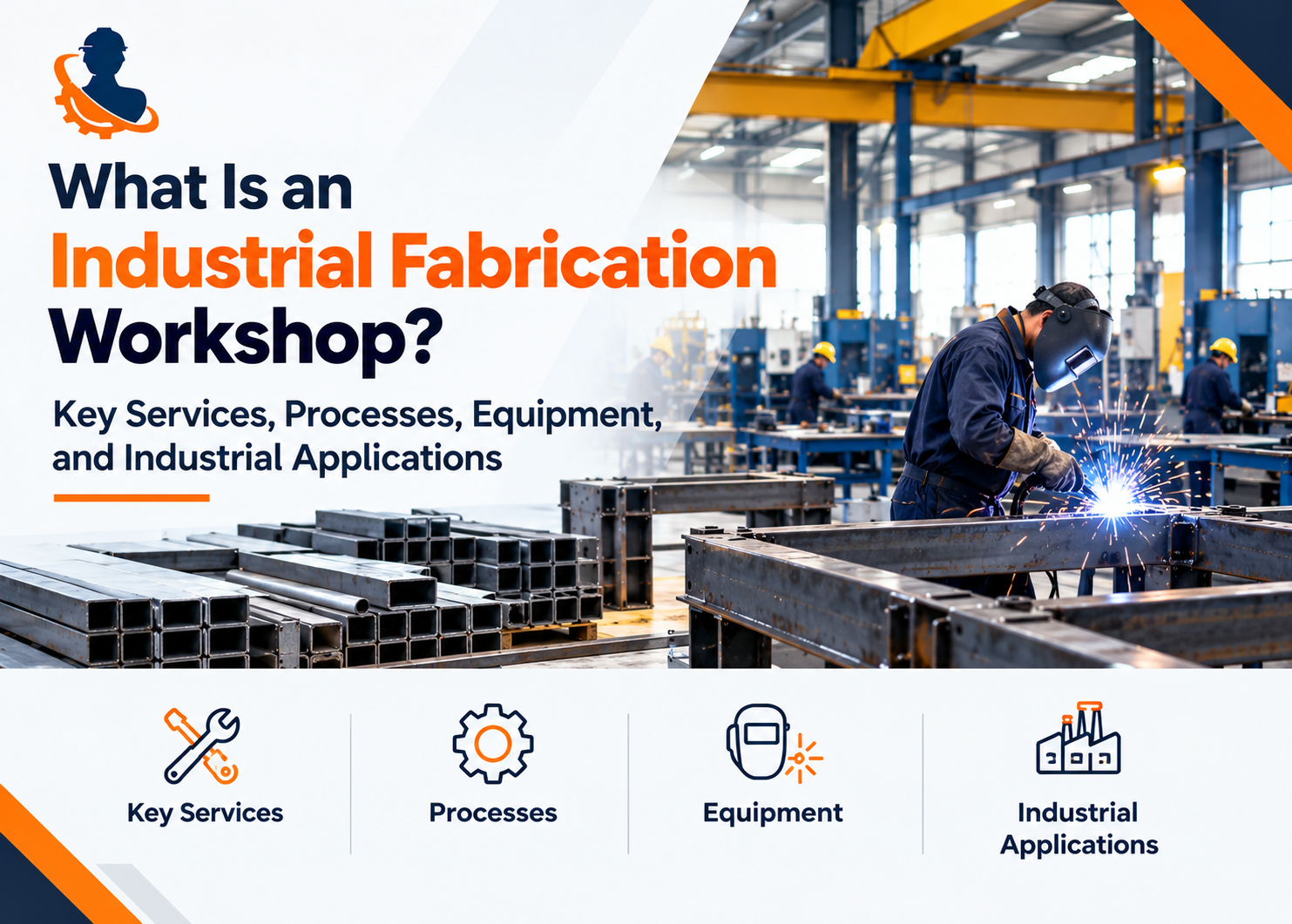
An industrial fabrication workshop is a specialised facility where raw metal materials are transformed into structures, components, machinery parts, and industrial equipment.
These workshops support manufacturing, construction, steel production, power generation, mining, and infrastructure development through precision engineering and skilled fabrication processes.
Industrial fabrication involves cutting, bending, welding, machining, assembling, and finishing materials according to specific engineering requirements.
From structural steel frameworks to customised machinery components, fabrication workshops contribute significantly to industrial productivity, equipment reliability, and project execution.
Companies such as Sarojini Group recognise the importance of industrial fabrication in supporting manufacturing operations, infrastructure projects, and industrial engineering requirements.
What Is an Industrial Fabrication Workshop?
An industrial fabrication workshop is a manufacturing facility equipped with specialised machinery, skilled technicians, and engineering tools for producing metal structures and components.
Unlike conventional manufacturing facilities, fabrication workshops primarily focus on transforming raw materials into customised products through multiple mechanical and joining processes.
These facilities work with various metals, including mild steel, stainless steel, carbon steel, and alloy steel.
Fabrication activities generally involve:
- Metal cutting and material preparation
- Structural steel fabrication
- Welding and mechanical joining
- Metal bending and forming
- Precision drilling and machining
- Industrial equipment fabrication
- Surface treatment and finishing
- Component assembly and inspection
Industrial fabrication workshops manufacture components according to approved drawings, dimensional specifications, load requirements, and operational conditions.
Their capabilities allow businesses to obtain customised industrial components without establishing dedicated manufacturing infrastructure for every project.
Why Are Industrial Fabrication Workshops Important?
Industrial fabrication workshops provide essential manufacturing support for businesses operating in heavy engineering, infrastructure, energy, and industrial production.
They help organisations manufacture specialised components that standard suppliers may not offer.
1. Customised Industrial Manufacturing
Industrial equipment often requires components with specific dimensions, materials, and structural characteristics.
Fabrication workshops manufacture customised products according to engineering drawings and project requirements.
This flexibility supports specialised machinery installations, plant modifications, and infrastructure development.
2. Improved Production Efficiency
A properly organised fabrication facility combines several manufacturing operations within a coordinated production environment.
This arrangement reduces unnecessary material movement, improves workflow coordination, and helps minimise production delays.
3. Better Structural Reliability
Industrial structures must withstand operational loads, environmental conditions, and mechanical stresses.
Controlled fabrication methods, suitable material selection, and systematic inspection help maintain structural integrity.
4. Reduced Installation Requirements
Prefabricated components arrive at construction or industrial sites ready for installation or final assembly.
Consequently, project teams can reduce certain on-site fabrication activities and improve installation planning.
5. Efficient Material Utilisation
Accurate cutting plans and production measurements help reduce avoidable material wastage.
Computer-controlled equipment can further improve consistency when manufacturing repeated components.
Key Services Offered by an Industrial Fabrication Workshop
Industrial fabrication facilities provide services covering multiple stages of metal component manufacturing.
Their service range depends on workshop capacity, engineering expertise, available machinery, and project specifications.
1. Structural Steel Fabrication
Structural steel fabrication involves manufacturing steel components used in buildings, industrial plants, equipment platforms, and infrastructure projects.
Common fabricated structures include:
- Industrial building frameworks
- Steel columns and beams
- Equipment support structures
- Industrial platforms and walkways
- Pipe racks and structural supports
- Factory sheds and roofing structures
- Staircases and access platforms
Steel sections undergo cutting, drilling, welding, and assembly according to approved structural drawings.
Accurate fabrication helps ensure that components align correctly during site installation.
2. Heavy Engineering Fabrication
Heavy engineering fabrication focuses on manufacturing large, high-strength components for demanding industrial operations.
These components often require specialised lifting arrangements, heavy-duty welding equipment, and extensive quality inspections.
Typical products include:
- Heavy machinery frames
- Industrial equipment housings
- Structural support assemblies
- Material-handling equipment components
- Crusher support structures
- Large industrial platforms
- Equipment mounting structures
Material thickness, component weight, and fabrication complexity influence the production process.
3. Sheet Metal Fabrication
Sheet metal fabrication converts flat metal sheets into functional industrial products.
Technicians use cutting, bending, punching, and joining techniques to achieve the required shapes.
Common applications include electrical enclosures, machine covers, protective guards, cabinets, ventilation components, and industrial panels.
This fabrication method suits products requiring consistent dimensions and relatively lightweight construction.
4. Industrial Welding Services
Welding permanently joins metal components using controlled heat, pressure, or suitable combinations of both.
Industrial workshops select welding processes according to material characteristics, joint configurations, and operating requirements.
Common welding techniques include:
- MIG/MAG welding: Suitable for many production and structural fabrication applications.
- TIG welding: Used where precise control and weld quality are important.
- Arc welding: Commonly applied to structural and heavy industrial fabrication.
- Flux-cored arc welding: Used for numerous structural and heavy-duty joining operations.
- Submerged arc welding: Often suitable for long welds on thicker components.
Appropriate welding procedures help maintain joint strength and dimensional accuracy.
5. Industrial Equipment Fabrication
Industrial plants frequently require specially manufactured equipment structures and supporting components.
Fabrication workshops produce equipment frames, mounting bases, hoppers, chutes, and machinery support assemblies.
These products must accommodate operational loads, vibration, equipment dimensions, and maintenance requirements.
Fabricated equipment can also support modifications and upgrades within existing industrial facilities.
6. Repair and Modification Services
Industrial machinery and supporting structures experience wear, corrosion, and mechanical damage during operation.
Fabrication workshops may provide repair services for damaged frames, structural supports, machinery guards, and other metal assemblies.
Technicians assess component condition before selecting an appropriate repair method.
Safety-critical repairs require engineering approval, suitable welding procedures, and specified inspection before equipment returns to service.
Major Processes Used in Industrial Fabrication Workshops
Industrial fabrication follows a systematic manufacturing process that converts engineering requirements into finished products.
Although individual projects differ, most workshops follow several essential production stages.
1. Engineering Design and Drawing Review
Fabrication begins with reviewing technical drawings, specifications, and material requirements.
Engineers examine component dimensions, welding details, connection arrangements, and manufacturing tolerances.
Computer-aided design software helps identify potential dimensional conflicts before production begins.
2. Material Selection and Inspection
Material selection directly influences product strength, durability, corrosion resistance, and manufacturing suitability.
Commonly used materials include:
- Mild steel
- Carbon steel
- Stainless steel
- Structural steel
- Alloy steel
- Aluminium
Material inspection verifies dimensions, grade identification, physical condition, and relevant documentation.
Workshops maintain material traceability when project specifications require it.
3. Metal Cutting
Cutting operations divide raw materials into the required dimensions and shapes.
The selected technique depends on material thickness, edge quality, production quantity, and precision requirements.
Common methods include plasma cutting, laser cutting, oxy-fuel cutting, mechanical sawing, and shearing.
Accurate cutting reduces unnecessary rework during subsequent fabrication stages.
4. Bending and Forming
Metal bending changes material geometry without necessarily removing material.
Hydraulic press brakes, rolling machines, and forming equipment produce angles, curves, cylinders, and specialised profiles.
Controlled bending helps maintain dimensional consistency and reduces material distortion.
5. Drilling and Machining
Fabricated components frequently require holes, slots, and accurately finished connection surfaces.
Machining operations include drilling, milling, turning, boring, and tapping.
Computer numerical control equipment can improve repeatability for components requiring closely controlled dimensions.
6. Welding and Assembly
After material preparation, technicians position and join individual components.
Fixtures, clamps, measuring instruments, and temporary welds help maintain correct alignment.
Welders follow specified procedures to produce joints that meet applicable project requirements.
7. Surface Treatment and Finishing
Surface treatment protects fabricated components from corrosion, abrasion, and environmental exposure.
Common finishing methods include:
- Abrasive blasting
- Industrial painting
- Powder coating
- Hot-dip galvanising
- Surface polishing
- Protective coating application
The appropriate treatment depends on environmental conditions, material properties, and expected service life.
8. Final Inspection and Dispatch
Finished components undergo dimensional verification and specified quality inspections.
Approved products are identified, packaged, and prepared for transportation.
Large fabricated assemblies may require specialised lifting equipment and carefully planned logistics arrangements.
Essential Equipment Used in Industrial Fabrication Workshops
An industrial fabrication workshop relies on machinery that supports accurate manufacturing, efficient production, and safe material handling.
Equipment selection depends on fabrication capacity, material type, component dimensions, and manufacturing complexity.
Metal Cutting Equipment
Cutting equipment prepares raw materials for further fabrication.
Common machines include:
- CNC plasma cutting machines
- Laser cutting machines
- Oxy-fuel cutting systems
- Band saws
- Hydraulic shearing machines
- Industrial cutting machines
Computer-controlled cutting improves repeatability when producing multiple components with similar specifications.
Welding Equipment
Welding machinery creates permanent connections between fabricated parts.
Equipment includes welding power sources, welding torches, electrode holders, positioners, and suitable shielding arrangements.
Automated or semi-automated systems can support repetitive welding operations where production volumes justify their use.
Metal Forming Equipment
Forming machinery changes material geometry to match engineering requirements.
Hydraulic press brakes, plate rolling machines, section bending machines, and mechanical presses support various fabrication activities.
Drilling and Machining Equipment
Machining equipment produces precise holes, finished surfaces, and mechanical interfaces.
Workshops commonly use radial drilling machines, milling machines, lathes, and CNC machining centres.
Material Handling Equipment
Large industrial components require suitable lifting and transportation arrangements.
Overhead cranes, hoists, forklifts, lifting beams, and material-handling trolleys help move materials between production stages.
Operators must follow equipment load limits and approved lifting procedures.
Inspection and Measurement Equipment
Quality inspection requires instruments capable of verifying dimensional and fabrication requirements.
Frequently used equipment includes:
- Vernier callipers
- Micrometres
- Measuring tapes
- Digital levels
- Welding gauges
- Surface profile gauges
- Coating thickness gauges
- Ultrasonic testing equipment
Calibrated measuring instruments help maintain reliable inspection results.
Industrial Applications of Fabrication Workshops
Industrial fabrication services support industries that depend on durable structures, specialised equipment, and accurately manufactured components.
1. Steel Manufacturing Industry
Steel plants require fabricated structures for material handling, processing equipment, maintenance platforms, and supporting infrastructure.
Fabrication workshops manufacture conveyor supports, machine frames, structural platforms, equipment bases, and access systems.
These components help maintain plant operations and support equipment installation.
2. Ferro Alloy Manufacturing
Ferro alloy production facilities operate specialised equipment under demanding mechanical and thermal conditions.
Fabrication services support furnace structures, material-handling arrangements, equipment platforms, and industrial maintenance requirements.
Projects may involve customised structural components designed for specific operating conditions.
3. Power Generation Industry
Power plants depend on fabricated steel structures for equipment installation, maintenance access, and operational support.
Applications include structural frameworks, pipe supports, platforms, ducting, and machinery foundations.
Appropriate material selection and inspection are particularly important for components exposed to demanding service conditions.
4. Mining and Mineral Processing
Mining facilities require robust fabricated structures capable of supporting heavy equipment and continuous material movement.
Typical applications include conveyor frameworks, equipment supports, screening structures, chutes, and maintenance platforms.
Fabricated components must accommodate mechanical stresses, abrasion, and demanding environmental conditions.
5. Construction and Infrastructure
Construction projects use fabricated steel components to support structural strength and efficient installation.
Applications include industrial sheds, bridges, commercial structures, stairways, platforms, and roofing frameworks.
Prefabrication can reduce site activities when manufacturers maintain suitable dimensional accuracy.
6. Cement Manufacturing
Cement plants require durable structures for material storage, processing, and transportation systems.
Fabrication workshops manufacture support frames, ducting, platforms, chutes, and conveyor structures.
These components support heavy machinery and industrial material-handling operations.
7. Chemical and Process Industries
Chemical processing facilities use fabricated structures for equipment support, access, and material movement.
Applications may include tanks, platforms, pipe supports, and processing equipment components.
Material compatibility and corrosion resistance remain essential considerations, especially for components exposed to aggressive substances.
Quality Control Standards in Industrial Fabrication
Quality assurance is essential for maintaining dimensional accuracy, manufacturing consistency, and structural reliability.
Industrial fabrication workshops should establish inspection procedures according to project specifications and applicable standards.
Material Quality Verification
Incoming materials require inspection against approved specifications.
Relevant documents may include material test certificates, dimensional records, and material identification details.
Welding Quality Inspection
Welding inspection helps identify defects that could affect joint integrity.
Inspection methods may include visual examination, ultrasonic testing, radiographic testing, magnetic particle testing, and liquid penetrant testing.
The required methods depend on material characteristics, joint classification, and project specifications.
Dimensional Accuracy Checks
Fabricated structures must match approved engineering drawings.
Inspectors verify component dimensions, alignment, connection positions, and required tolerances.
Surface Protection Inspection
Protective finishes require verification to ensure appropriate surface preparation and coating application.
Inspection may cover cleanliness, coating thickness, adhesion, and visible surface defects.
Documentation and Traceability
Production documentation helps maintain accountability throughout fabrication.
Inspection reports, material certificates, welding records, and approved drawings support quality verification and future maintenance.
Workplace Safety in Industrial Fabrication Workshops
Industrial fabrication involves hazards associated with welding, cutting, lifting, electricity, rotating machinery, and material movement.
A structured safety programme helps protect workers and maintain reliable production operations.
Essential Safety Measures
Important safety practices include:
- Providing appropriate personal protective equipment
- Maintaining adequate welding fume extraction and ventilation
- Inspecting electrical equipment and welding connections
- Using suitable machine guards
- Establishing safe lifting procedures
- Maintaining clear access routes
- Implementing fire prevention and hot-work controls
- Training personnel in equipment operation
- Following lockout and isolation procedures during maintenance
Workshops must also assess confined-space hazards, especially when workers enter tanks or enclosed industrial equipment.
Regular inspections and effective supervision help identify unsafe working conditions before incidents occur.
Benefits of Choosing a Professional Industrial Fabrication Workshop
Selecting a capable fabrication workshop offers several operational advantages for industrial businesses.
Consistent Manufacturing Quality
Established fabrication procedures help maintain product consistency.
Engineering supervision and inspection minimise the likelihood of dimensional errors and manufacturing defects.
Customised Engineering Solutions
Professional workshops manufacture components tailored to particular industrial systems.
This flexibility supports machinery upgrades, equipment replacement, and customised infrastructure requirements.
Better Project Coordination
Coordinated fabrication operations support effective production scheduling and material planning.
Clear communication between engineers, supervisors, and clients helps minimise avoidable delays.
Lower Installation Complexity
Workshop-manufactured assemblies reduce the amount of fabrication required at installation sites.
This approach can improve site coordination and reduce exposure to certain construction-related risks.
Long-Term Equipment Reliability
Suitable fabrication techniques and material selection contribute to component durability.
Inspection and maintenance planning further support reliable industrial performance.
How to Choose the Right Industrial Fabrication Workshop
Industrial businesses should evaluate several factors before selecting a fabrication service provider.
Technical Capabilities
The workshop should possess equipment and manufacturing expertise suitable for the intended project.
Businesses should assess cutting capacity, welding facilities, machining arrangements, and material-handling capabilities.
Engineering Support
Engineering capabilities help translate technical drawings into manufacturable components.
Skilled personnel should identify fabrication challenges and coordinate approved technical changes.
Quality Assurance Procedures
Review the workshop’s inspection processes, material traceability, testing arrangements, and documentation practices.
Relevant certifications and qualified personnel may be necessary for specialised projects.
Production Capacity
Workshop capacity should match component dimensions, material thickness, manufacturing volume, and delivery requirements.
Heavy fabrication projects may require additional lifting and transportation arrangements.
Delivery and Project Management
Reliable scheduling and progress monitoring support timely project execution.
Project managers should assess production planning, coordination procedures, and logistics capabilities.
Role of Industrial Fabrication in Modern Manufacturing
Industrial fabrication contributes to industrial development by supporting infrastructure construction, machinery manufacturing, and plant maintenance.
Advancements in CNC machining, computer-aided design, automated cutting, and digital production planning continue to improve fabrication capabilities.
Digital drawings help manufacturers maintain dimensional consistency and identify potential manufacturing conflicts.
Computer-controlled machinery supports repeatable production while reducing certain manual measurement and cutting activities.
Additionally, improved inspection technologies help manufacturers identify defects and verify component quality.
Industrial fabrication workshops also support equipment refurbishment and component replacement, extending the usefulness of existing manufacturing assets.
As industrial requirements become more specialised, the demand for accurate fabrication and coordinated engineering services remains significant.
Why Choose Sarojini Group for Industrial Fabrication Requirements?
Industrial manufacturing projects require dependable engineering coordination, appropriate production methods, and consistent attention to quality.
Sarojini Group recognises the importance of fabrication services in supporting steel production, industrial infrastructure, and heavy engineering applications.
The company highlights the value of accurate manufacturing, suitable material selection, and structured fabrication procedures for industrial projects.
Important considerations for industrial fabrication requirements include:
- Engineering accuracy: Manufacturing components according to approved technical specifications.
- Material suitability: Selecting metals based on structural and operational requirements.
- Production coordination: Aligning fabrication activities with project schedules.
- Quality-focused practices: Incorporating inspection and verification throughout manufacturing.
- Industrial application requirements: Considering installation conditions, operating loads, and maintenance needs.
For industrial businesses, selecting suitable fabrication capabilities contributes to efficient project execution and dependable equipment performance.
FAQs
What services are available in an industrial fabrication workshop?
Common services include structural steel fabrication, heavy engineering fabrication, sheet metal processing, industrial welding, precision machining, equipment fabrication, and metal finishing.
Some workshops also provide component repairs, modifications, assembly, dimensional inspection, and installation support, depending on their technical capabilities.
What equipment is commonly used in industrial fabrication workshops?
Industrial fabrication workshops use CNC cutting machines, welding equipment, hydraulic press brakes, drilling machines, milling machines, overhead cranes, and measuring instruments.
Advanced facilities may also use automated welding systems, plate rolling machines, and specialised inspection equipment for complex industrial projects.
Which industries benefit most from industrial fabrication workshops?
Steel manufacturing, ferro alloy production, mining, power generation, cement manufacturing, construction, and chemical processing industries frequently require fabrication services.
NEWSLETTER
Sign up your mailing list to get lastest Updates.