

Why Choosing the Right Ferroalloy Manufacturer Matters for Steel Production
Why Choosing the Right Ferroalloy Manufacturer Matters for Steel Production
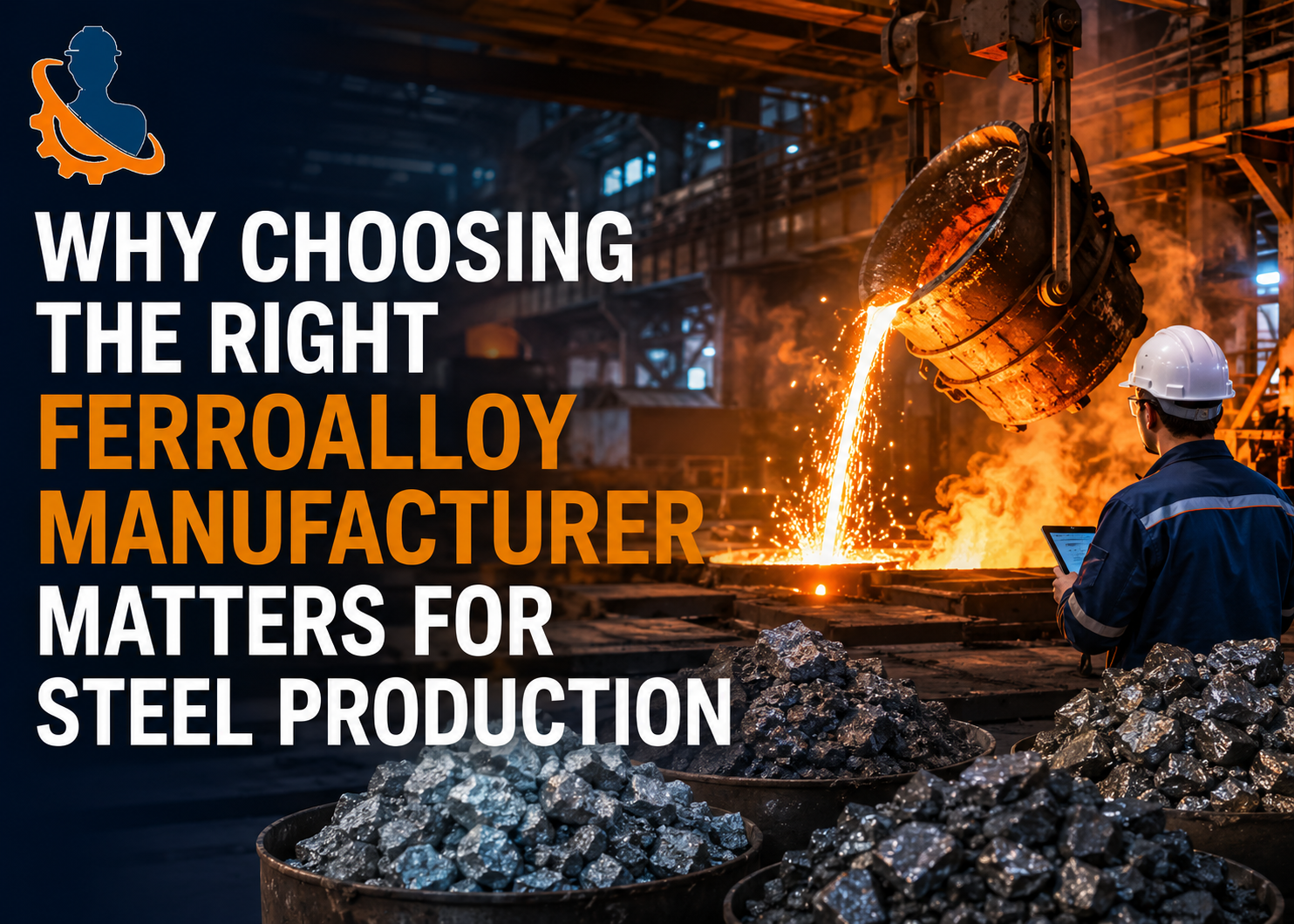
Steel remains one of the most important materials used across construction, infrastructure, automotive, engineering, shipbuilding, energy, mining, railways, and heavy manufacturing. The performance of steel depends on several factors, including raw materials, production methods, and quality control. Among these, ferroalloys play a significant role in determining the final characteristics of steel.
Selecting the right ferroalloy manufacturer is more than a purchasing decision. It directly influences production efficiency, product consistency, operating costs, and the mechanical properties of finished steel. Manufacturers that consistently supply premium ferroalloys help steel producers maintain stable production while meeting strict industrial specifications.
At Sarojini Group, quality manufacturing, technical expertise, and reliable supply are considered essential elements for supporting steel producers across different industries.
The Role of Ferroalloys in Steel Production
Ferroalloys are alloys made by combining iron with one or more elements such as manganese, silicon, chromium, molybdenum, vanadium, or nickel. These alloys are added during steelmaking to improve the physical, chemical, and mechanical properties of steel.
Different ferroalloys perform different functions, including:
- Improving tensile strength
- Increasing hardness
- Enhancing wear resistance
- Improving corrosion resistance
- Increasing heat resistance
- Supporting deoxidation
- Refining grain structure
- Improving weldability
- Enhancing impact strength
Without properly manufactured ferroalloys, producing high-performance steel for industrial applications becomes significantly more difficult.
Why the Quality of Ferroalloys Cannot Be Overlooked
Every steel producer aims to manufacture products that meet strict quality standards. Whether producing structural steel, stainless steel, alloy steel, or specialty steel, consistency is essential.
Poor-quality ferroalloys may introduce unwanted impurities that negatively affect steel properties. This can lead to:
- Inconsistent chemical composition
- Reduced product strength
- Surface defects
- Production interruptions
- Increased rejection rates
- Higher processing costs
- Customer complaints
Working with an experienced ferroalloy manufacturer helps reduce these risks by supplying materials that meet specified chemical compositions and industry standards.
Consistent Chemical Composition Improves Production Stability
Steel manufacturing depends on precise chemistry. Even small variations in alloy composition can alter the final characteristics of steel.
Reliable manufacturers carefully monitor:
- Carbon content
- Silicon percentage
- Manganese levels
- Chromium concentration
- Sulfur content
- Phosphorus levels
- Moisture content
- Particle size
Consistent chemistry enables steel plants to maintain stable furnace operations while reducing production adjustments.
Stable inputs also improve repeatability, allowing manufacturers to produce steel with uniform quality across multiple production batches.
Better Raw Materials Produce Better Ferroalloys
The manufacturing process begins with selecting high-quality raw materials.
Premium producers carefully source:
- High-grade ores
- Quality reductants
- Reliable fluxes
- Controlled additives
Inferior raw materials often introduce unwanted impurities that remain in the finished ferroalloy.
Experienced manufacturers invest significant effort in raw material inspection before production begins.
This attention to detail contributes directly to better steel quality.
Advanced Manufacturing Processes Make a Difference
Modern ferroalloy production involves sophisticated equipment and carefully controlled manufacturing parameters.
Professional manufacturers focus on:
- Temperature control
- Furnace efficiency
- Process automation
- Controlled cooling
- Chemical analysis
- Quality inspections
- Proper crushing and sizing
- Moisture control
Each stage contributes to producing ferroalloys with predictable performance during steelmaking.
Efficient production methods also improve energy utilization while reducing waste.
Strict Quality Control Supports Reliable Steel Production
Quality control extends far beyond the final inspection.
Trusted manufacturers inspect materials throughout production using multiple checkpoints.
These may include:
Raw Material Testing
Incoming materials undergo chemical analysis before entering production.
Process Monitoring
Operators continuously monitor furnace temperatures, reaction conditions, and process parameters.
Laboratory Analysis
Samples are tested to verify chemical composition and physical characteristics.
Final Product Inspection
Finished ferroalloys undergo additional testing before packaging and dispatch.
Multiple inspection stages help ensure every shipment meets customer requirements.
Reliable Supply Prevents Production Delays
Steel plants operate on carefully planned production schedules.
Any interruption in ferroalloy supply can delay melting operations, increase downtime, and affect delivery commitments.
A dependable ferroalloy manufacturer develops efficient production planning and inventory management systems to ensure uninterrupted supply.
Reliable delivery provides several benefits:
- Continuous production
- Better inventory planning
- Lower emergency procurement costs
- Improved customer satisfaction
- Stable production schedules
Supply reliability becomes especially important for large integrated steel plants with continuous operations.
Technical Expertise Adds Long-Term Value
Manufacturing ferroalloys involves much more than operating furnaces.
Experienced manufacturers understand:
- Steel chemistry
- Metallurgical reactions
- Alloy behavior
- Furnace operations
- Customer production requirements
- Industry specifications
This technical knowledge helps customers choose suitable ferroalloys for specific steel grades.
Manufacturers with strong metallurgical expertise often provide valuable recommendations that improve production efficiency.
Custom Solutions Support Different Steel Grades
Different industries require different steel properties.
Examples include:
- Construction steel
- Automotive steel
- Tool steel
- Stainless steel
- Railway steel
- Power plant steel
- Mining equipment steel
- Heavy engineering steel
Each application requires carefully selected alloy additions.
An experienced ferroalloy manufacturer understands these varying requirements and supplies products that match customer specifications.
Impurity Control Improves Finished Steel
Unwanted impurities reduce steel quality.
Elements such as sulfur and phosphorus can negatively affect:
- Toughness
- Weldability
- Corrosion resistance
- Mechanical strength
- Surface finish
Professional manufacturers maintain strict impurity limits throughout production.
Lower impurity levels contribute to stronger and more reliable steel products.
Consistent Particle Size Improves Furnace Performance
Particle size is often overlooked but plays an important role in steelmaking.
Uniform sizing provides:
- Better melting efficiency
- Improved alloy recovery
- Consistent furnace reactions
- Reduced material losses
- Better process control
Reliable manufacturers carefully control crushing, screening, and grading operations before dispatch.
Production Efficiency Depends on Reliable Inputs
Steel manufacturers constantly work to improve operational efficiency.
Consistent ferroalloys contribute by reducing:
- Furnace corrections
- Rework
- Material wastage
- Production delays
- Energy consumption
Improved efficiency leads to lower production costs and better profitability.
Better Alloy Recovery Reduces Overall Costs
Not every kilogram of ferroalloy added to a furnace becomes part of the finished steel.
Recovery rates depend on:
- Alloy quality
- Furnace conditions
- Steel chemistry
- Addition methods
High-quality ferroalloys generally provide better recovery, allowing manufacturers to achieve target compositions using optimized material quantities.
Improved recovery helps reduce raw material consumption over time.
Meeting International Quality Standards
Many steel manufacturers serve global markets where quality requirements are stringent.
Customers often expect compliance with recognized manufacturing standards.
Professional ferroalloy producers maintain:
- Documented quality systems
- Material traceability
- Laboratory testing
- Process documentation
- Inspection records
These practices build customer confidence while supporting export-oriented steel production.
Environmental Responsibility Matters
Industrial customers increasingly value environmentally responsible manufacturing practices.
Leading producers focus on:
- Energy-efficient operations
- Controlled emissions
- Waste reduction
- Resource optimization
- Responsible material handling
- Sustainable manufacturing practices
Responsible production benefits manufacturers, customers, and surrounding communities.
Strong Infrastructure Supports Reliable Manufacturing
Production capacity alone does not determine reliability.
Established manufacturers invest in:
- Modern furnaces
- Advanced laboratories
- Material handling systems
- Warehousing facilities
- Packaging infrastructure
- Logistics support
Strong infrastructure enables consistent production while maintaining quality across large volumes.
Customer Support Strengthens Business Relationships
Long-term partnerships depend on effective communication.
Professional manufacturers provide support before, during, and after delivery.
Good customer support includes:
- Technical discussions
- Product recommendations
- Prompt responses
- Quality documentation
- Delivery coordination
- Ongoing assistance
This collaborative approach helps steel manufacturers address production challenges more efficiently.
Choosing the Right Ferroalloy Manufacturer
Several factors should be evaluated before selecting a supplier.
Manufacturing Experience
Experience often reflects process maturity and technical capability.
Product Quality
Look for consistent chemical composition and reliable quality assurance.
Production Capacity
Adequate capacity helps meet both regular and increased demand.
Technical Knowledge
Manufacturers with metallurgical expertise provide valuable production support.
Laboratory Facilities
Well-equipped laboratories improve quality verification and consistency.
Delivery Performance
Reliable logistics reduce production risks.
Customer Reputation
Positive industry relationships often indicate dependable performance.
Commitment to Improvement
Manufacturers that continuously invest in technology and quality systems are better positioned to support evolving industry requirements.
Industries That Depend on High-Quality Ferroalloys
Reliable ferroalloys contribute to numerous sectors, including:
- Structural steel manufacturing
- Automobile production
- Railway infrastructure
- Shipbuilding
- Oil and gas equipment
- Heavy engineering
- Mining machinery
- Industrial fabrication
- Power generation
- Aerospace components
- Defense equipment
- Industrial machinery
Each industry depends on steel that performs consistently under demanding operating conditions.
Why Steel Producers Prefer Long-Term Manufacturing Partners
Many successful steel companies build long-term relationships with trusted suppliers rather than changing vendors frequently.
Long-term partnerships provide:
- Stable quality
- Predictable supply
- Better planning
- Technical collaboration
- Faster issue resolution
- Greater operational efficiency
Mutual trust creates stronger business relationships that support sustained growth.
The Sarojini Group Commitment
At Sarojini Group, manufacturing excellence is supported through disciplined production processes, advanced quality control, skilled professionals, and a customer-focused approach. Every stage—from sourcing raw materials to inspection and dispatch—is managed with precision to supply ferroalloys that meet demanding industrial requirements.
The company emphasizes consistency, dependable delivery, and continuous process improvement to support steel manufacturers seeking reliable performance across diverse applications. By combining technical expertise with modern manufacturing practices, Sarojini Group works to help customers achieve stable production, improved alloy recovery, and superior steel quality.
Final Thoughts
The success of steel production depends on many interconnected factors, and the quality of ferroalloys remains one of the most influential. Choosing the right ferroalloy manufacturer helps ensure consistent chemical composition, dependable supply, efficient furnace operations, lower production costs, and superior finished steel.
A manufacturer that prioritizes quality control, technical expertise, reliable logistics, and continuous improvement becomes more than a supplier—it becomes a valuable production partner. For steel producers aiming to deliver dependable products across demanding industries, partnering with an experienced manufacturer like Sarojini Group contributes to stronger operational performance and long-term business success.
NEWSLETTER
Sign up your mailing list to get lastest Updates.